Anecdote
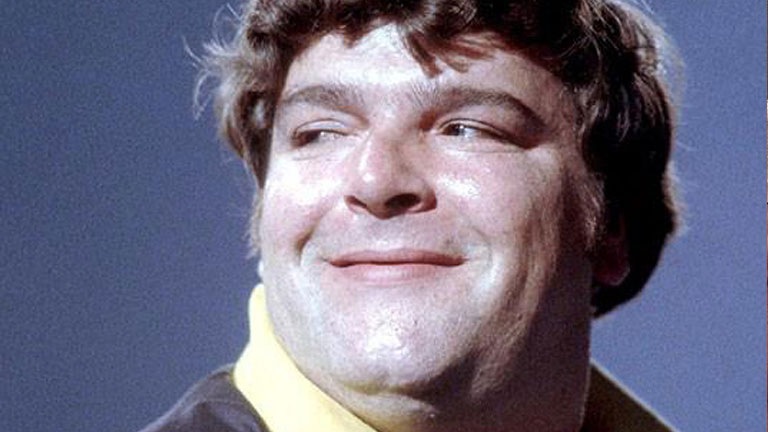
Eric Bristow helped him early on, and Taylor then became the dominant benchmark of the modern game.
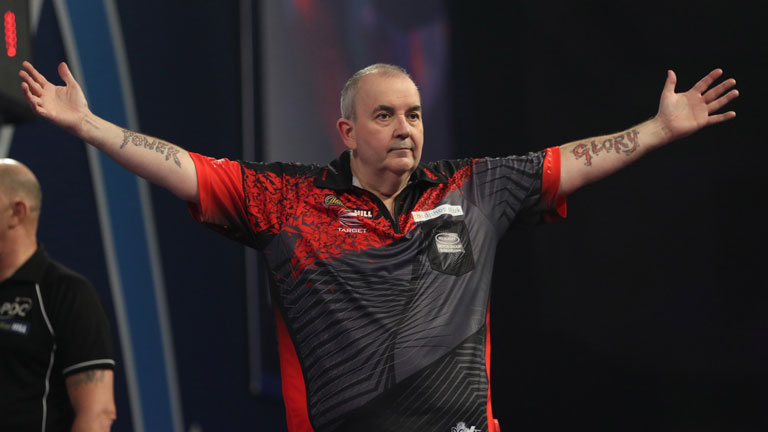

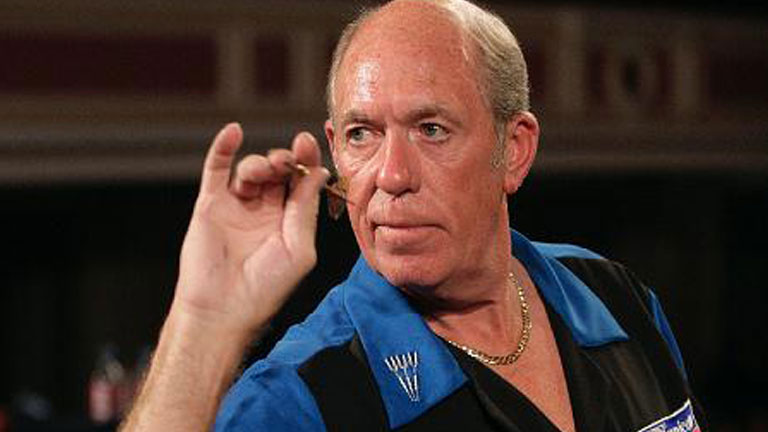
Phil Taylor is a England darts player, competing on the PDC circuit. Known as "The Power", Phil Taylor's walk-on music is "The Power" by Snap!.
This darts entrance song moment helps define player identity and crowd atmosphere before the first throw.
Eric Bristow helped him early on, and Taylor then became the dominant benchmark of the modern game.
"I eat, breathe and sleep darts."
Source: BrainyQuote / archived quote source

Go from this player’s setup to the rules, doubles, and checkout habits that shape real matchplay.
Official PDC data · Updated4 Mar 2026
20122012/2013 PDC World Championship
18 Dec 2012 · Season 2012
20092009/2010 PDC World Championship
18 Dec 2009 · Season 2009
20082008/2009 PDC World Championship
4 Jan 2009 · Season 2008
20052005/2006 PDC World Championship
19 Dec 2005 · Season 2005
20042004/2005 PDC World Championship
26 Dec 2004 · Season 2004
20032003/2004 PDC World Championship
27 Dec 2003 · Season 2003
20012001/2002 PDC World Championship
28 Dec 2001 · Season 2001
20002000/2001 PDC World Championship
28 Dec 2000 · Season 2000
19991999/2000 PDC World Championship
28 Dec 1999 · Season 1999
19981998/1999 PDC World Championship
28 Dec 1998 · Season 1998
19971997/1998 PDC World Championship
29 Dec 1997 · Season 1997
19961996/1997 PDC World Championship
29 Dec 1996 · Season 1996
20122012 Premier League - PLAY OFFS
17 May 2012 · Season 2012
20102010 Premier League - PLAY OFFS
24 May 2010 · Season 2010
20082008 Premier League - PLAY OFFS
26 May 2008 · Season 2008
20072007 Premier League - PLAY OFFS
28 May 2007 · Season 2007
20062006 Premier League - PLAY OFFS
29 May 2006 · Season 2006
20052005 Premier League - PLAY OFFS
30 May 2005 · Season 2005
20172017 Melbourne Darts Masters
18 Aug 2017 · Season 2017
20172017 World Matchplay
22 Jul 2017 · Season 2017
20162016 Sydney Darts Masters
18 Aug 2016 · Season 2016
20162016 UK Open - Qualifier 3
7 Feb 2016 · Season 2016
20152015 Sydney Darts Masters
20 Aug 2015 · Season 2015
20152015 Perth Darts Masters
14 Aug 2015 · Season 2015
20152015 Japan Darts Masters
27 Jun 2015 · Season 2015
20152015 UK Open - Qualifier 6
22 Feb 2015 · Season 2015
20142014 Grand Slam of Darts
8 Nov 2014 · Season 2014
20142014 Sydney Masters
28 Aug 2014 · Season 2014
20142014 Perth Masters
22 Aug 2014 · Season 2014
20142014 World Matchplay
19 Jul 2014 · Season 2014
20162016 European Tour 5 - Austrian Darts Open
10 Jun 2016 · Season 2016
20152015 Players Championship 9
16 May 2015 · Season 2015
20142014 Players Championship 4
23 Mar 2014 · Season 2014
20132013 European Tour 5 - Gibraltar Darts Trophy
28 Jun 2013 · Season 2013
20122012 European Tour 2 - German Darts Championship
22 Jun 2012 · Season 2012
20122012 Players Championship 3
10 Mar 2012 · Season 2012
20112011 Players Championship 31
27 Nov 2011 · Season 2011
20112011 Players Championship 30
26 Nov 2011 · Season 2011
20112011 Players Championship 21
1 Oct 2011 · Season 2011
20102010 Players Championship 36
27 Nov 2010 · Season 2010
20102010 Players Championship 19 - US Open
27 Jun 2010 · Season 2010
20102010 Players Championship 14
16 May 2010 · Season 2010
20062006 World Series of Darts
20 May 2006 · Season 2006
20162016 Champions League of Darts
24 Sept 2016 · Season 2016
20092009 German Darts Championship
28 Nov 2009 · Season 2009
20092009 Las Vegas Desert Classic
1 Jul 2009 · Season 2009
20082008 Las Vegas Desert Classic
2 Jul 2008 · Season 2008
20052005 Las Vegas Desert Classic
3 Jul 2005 · Season 2005
20042004 Champion vs Champion
21 Nov 2004 · Season 2004
20042004 Ireland Open Autumn Classic
12 Sept 2004 · Season 2004
20042004 Las Vegas Desert Classic
4 Jul 2004 · Season 2004
20022002 Las Vegas Darts Classic
5 Jul 2002 · Season 2002
20012001 Golden Harvest North American Cup
20 May 2001 · Season 2001
20002000 Golden Harvest North American Cup
21 May 2000 · Season 2000
19991999 Champion vs Champion
7 Nov 1999 · Season 1999
A strong legacy model combines title outcomes with process metrics: scoring floor across long sessions, checkout quality in deciding legs, and repeatability under stage pressure. Raw totals matter, but they hide context like field depth, format variance, and whether performance held across multiple eras.
Phil Taylor competed at top level across 1987-2018, which spans different format pressures and scoring environments. For a fair reading, analysts should weight durability, tactical adaptability, and big-match execution. Phil Taylor set the modern benchmark for dominance, winning across three decades and collecting a record haul of major silverware. His peak reshaped professional standards for scoring pressure and double conversion on TV stages.
In archived matches, the top signal is usually leg architecture: strong first-nine setup, pragmatic route management into finishes, and disciplined double selection rather than low-percentage hero attempts. Elite legends often win by reducing volatility, not by chasing highlight darts every visit.
With Phil Taylor, a useful review method is sequence-based: track what was left after each scoring phase, how cover shots protected two-visit finishes, and whether tempo stayed stable after a miss. That tactical chain is typically where championship-level separation appears.
Cross-era comparison works best when using transferable dimensions: sustained scoring pressure, finish conversion in high leverage legs, and consistency from early rounds to televised sessions. Equipment trends and average inflation can distort direct stat comparisons if context is ignored.
A practical method is relative dominance: compare Phil Taylor against peers from the same window, then map which strengths still project into current standards. For example, elite setup discipline and calm checkout logic usually translate better across generations than pure pace or crowd volume.
Pressure management is most visible one visit after a mistake. The key indicators are stable pre-throw routine, conservative arithmetic under stress, and the ability to protect a finish path instead of forcing a bailout treble. Legends separate themselves by decision quality when expected value drops.
For Phil Taylor, review deciders and late-set sequences: look at tempo control, target discipline on setup darts, and whether the next leg starts clean after a missed double. Those details reveal competitive resilience far better than post-match scorelines alone.
The most transferable elements are structural: predictable setup routes, preferred-double planning, and a consistent reset protocol after misses. These habits age well because they reduce cognitive load when match tension rises and protect scoring rhythm across long sessions.
For current professionals, this means preserving efficient leg design under faster modern pacing. For serious amateurs in England and beyond, it means training repeatable decision frameworks before chasing speed. Phil Taylor's legacy is especially instructive when treated as a blueprint for process discipline.