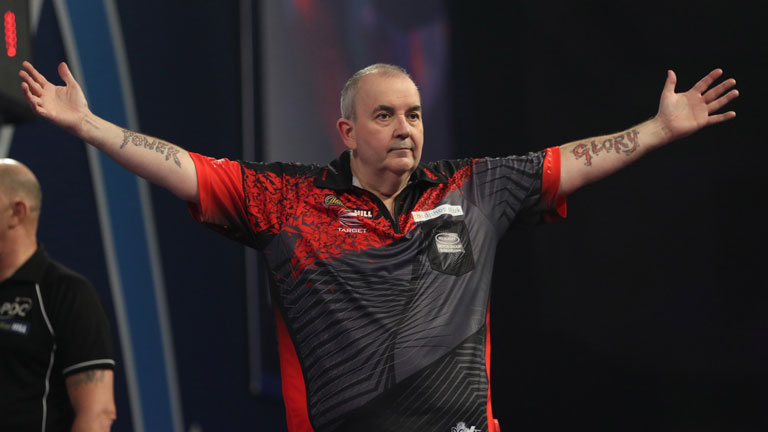
🥇 Latest winner
Luke Littler
2025 Major tournament guide
A hybrid major where group-stage management and knockout execution are both required to win the title.
🥇 Latest winner
👑 Record champion
📍 Venue
Aldersley Leisure Village Wolverhampton, England🎯 Format
Group stage + knockout / legs Premier EventExpected late-season slot for the next Grand Slam edition.
Few televised majors combine early group pressure with later elimination intensity this clearly.
Its structure and timing make it one of the strongest late-season measuring points for elite form.
Players must switch from scenario management in groups to immediate execution in knockout rounds.
Luke Littler
Champion in 2025
Luke Littler vs Luke Humphries
Final year: 2025
6 titles
Last title: 20143 titles
Last title: 20173 titles
Last title: 2021| Year | Winner | Runner-up |
|---|---|---|
| 2025 | ||
| 2024 | ||
| 2023 | ||
| 2022 | ||
| 2021 | ||
| 2020 | José de Sousa | |
| 2019 | ||
| 2018 | ||
| 2017 | ||
| 2016 |
Group-to-knockout momentum in action
This highlight shows the late-stage intensity that follows a group phase where qualification scenarios already create pressure.
Grand Slam begins with group-stage play, then transitions to knockout rounds in legs.
Field composition and qualification route differ from many majors, which gives the event a unique competitive mix.
The decisive skill is transition control: surviving group pressure while peaking in elimination matches.
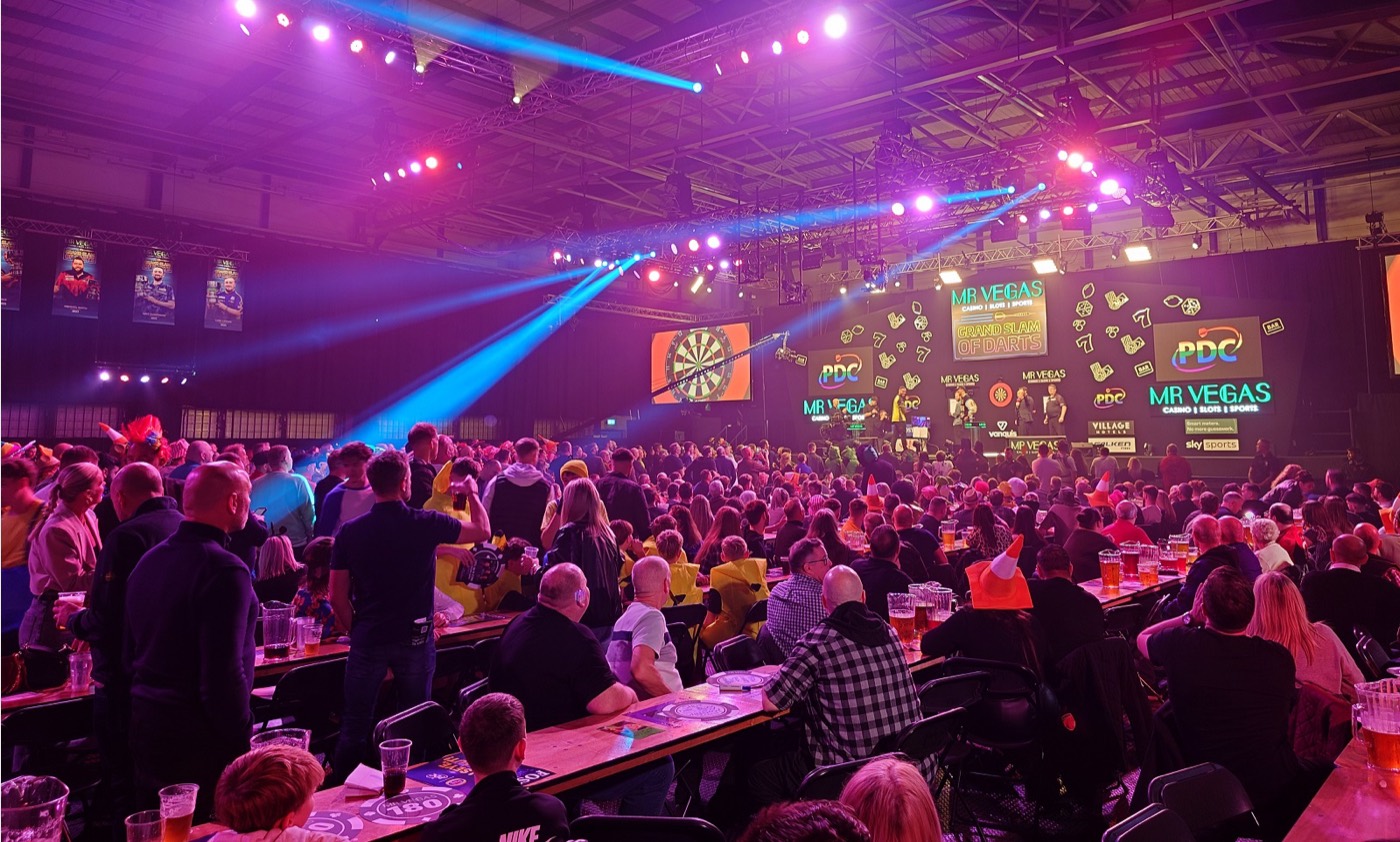
Venue details
Wolverhampton, England
Latest prize fund: £650,000 (2025 edition)
Wolverhampton gives the event continuity and a recognizable late-season stage environment.
The shift from group phase to knockout phase creates a clear atmosphere change during the same tournament week.
Venue photo
Map of England with Aldersley Leisure Village highlighted
Anecdote
Phil Taylor winning the first four editions set the tone for the event’s reputation: if you can survive both group pressure and knockout rounds, you earn real major credibility.
Historic names most associated with Grand Slam title legacy.
Recent winners shaping the current era.
The active names most linked to current Grand Slam storylines.
Continue with the major-event guides most connected to this tournament’s format, venue pressure, and current title storylines.
It combines group-stage strategy and knockout pressure, so players must handle two different match contexts in one event.
No. Knockout rounds can reset momentum quickly even after strong group-stage results.
Group phase allows scenario management, while knockout rounds demand immediate high-risk execution.
Yes. It is treated as a major with clear late-season relevance and strong fan attention.
Its value comes from title prestige, format identity, and how strongly results here influence player perception across the season.
The event has its own competitive identity through format, venue atmosphere, and the type of pressure players face in decisive rounds.
The Darts Fan editorial team
19 March 2026
Grand Slam sections are reviewed post-event to keep format framing, winners context, and related links accurate.
Winners, links, and format context are checked against our structured source on each major update cycle.