
How to Choose Your First Darts
Your first darts should make practice easier, not more complicated. This guide gives a simple framework to avoid overbuying and start with repeatable basics.
- Start simple One stable baseline setup beats five random comparisons.
- Comfort beats specs Pick the feel you can repeat under pressure, not spec-sheet hype.
- Avoid random upgrades Upgrade only after several sessions of clear practice data.
🧭 First Darts Decision Framework
Start with a mainstream weight
Begin in the practical beginner zone, not with an extreme setup.
Choose a simple barrel profile
Clean grip and predictable feel beat novelty early on.
Keep flights and shafts standard
Do not create confusion by changing too many variables at once.
Judge after real sessions
Review after repeated practice, not one emotional session.
🧠 Core Explanation
What to prioritize first
Start with a mainstream 22g-24g range, a comfortable barrel shape, and standard accessories. Your goal is a repeatable feel you can trust session after session.
What to ignore early on
Ignore micro-spec obsession, pro branding pressure, constant upgrades, and advanced customization too early. None of these replace consistent reps.
How to test without confusion
Run one routine, change one setup variable at a time, compare grouping consistency, and keep notes so decisions come from data instead of impulse.
🛒 Recommended First Dart Sets
Affiliate note: some links below may earn a commission at no extra cost to you.
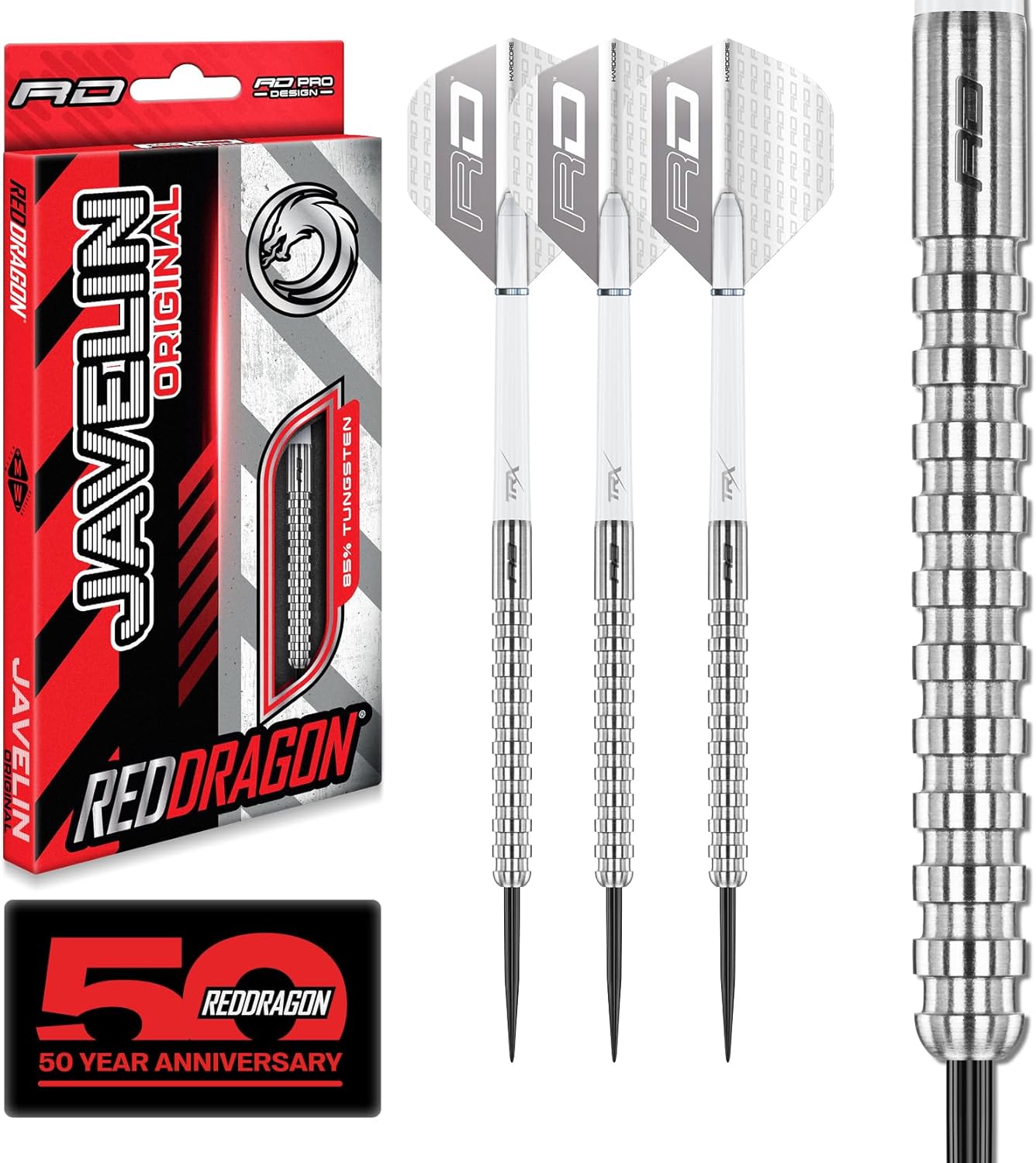
Ideal beginner baseline
£18.99
Red Dragon Javelin Tungsten Checkout
Best first set for most beginners: a simple steel-tip tungsten baseline for early sessions without overcomplication.
View beginner set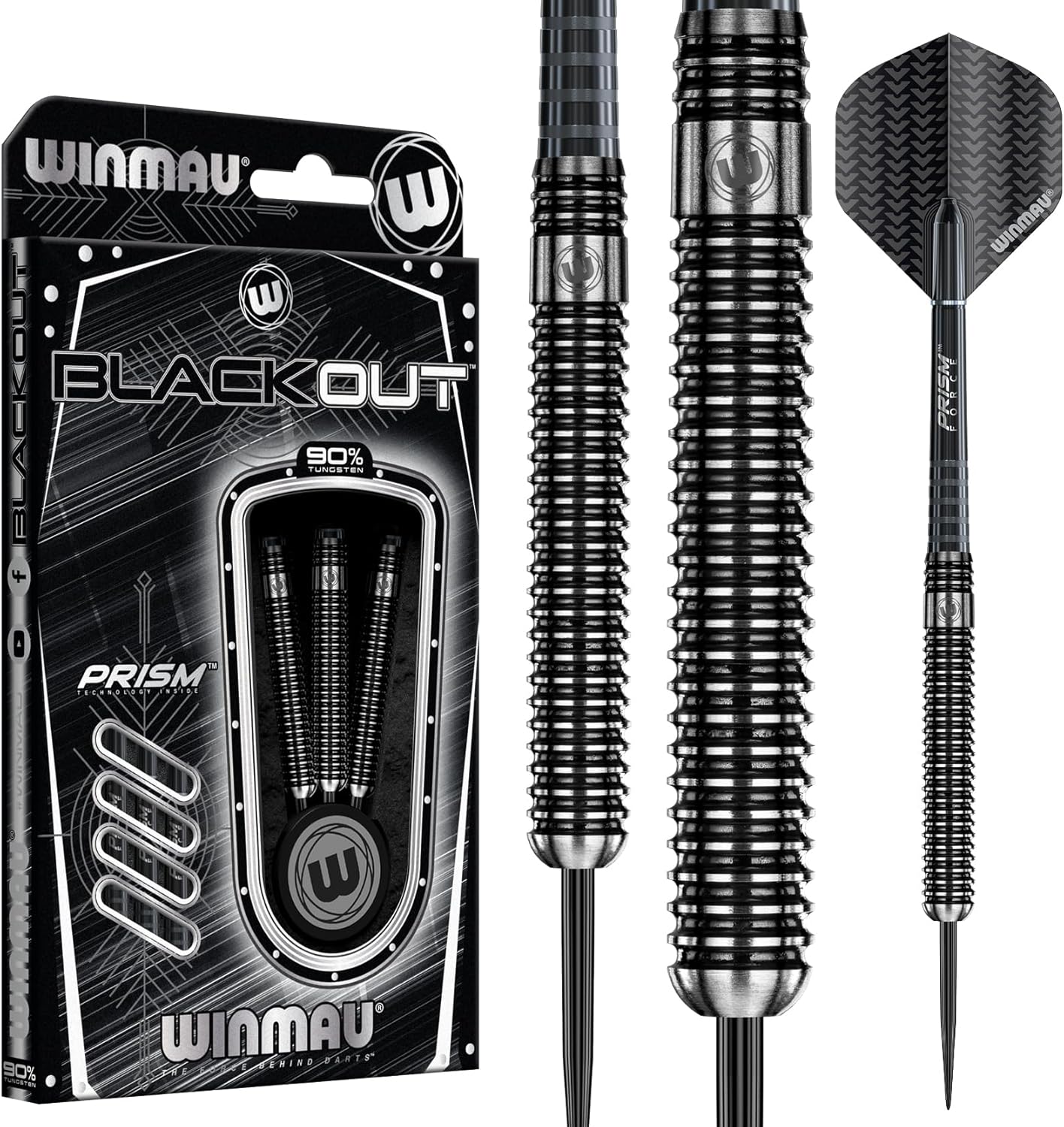
Quality amateur option
£50.00
Winmau Blackout Tungsten Black Professional
A practical quality step-up for amateurs who already know they want to stay in the hobby.
View amateur option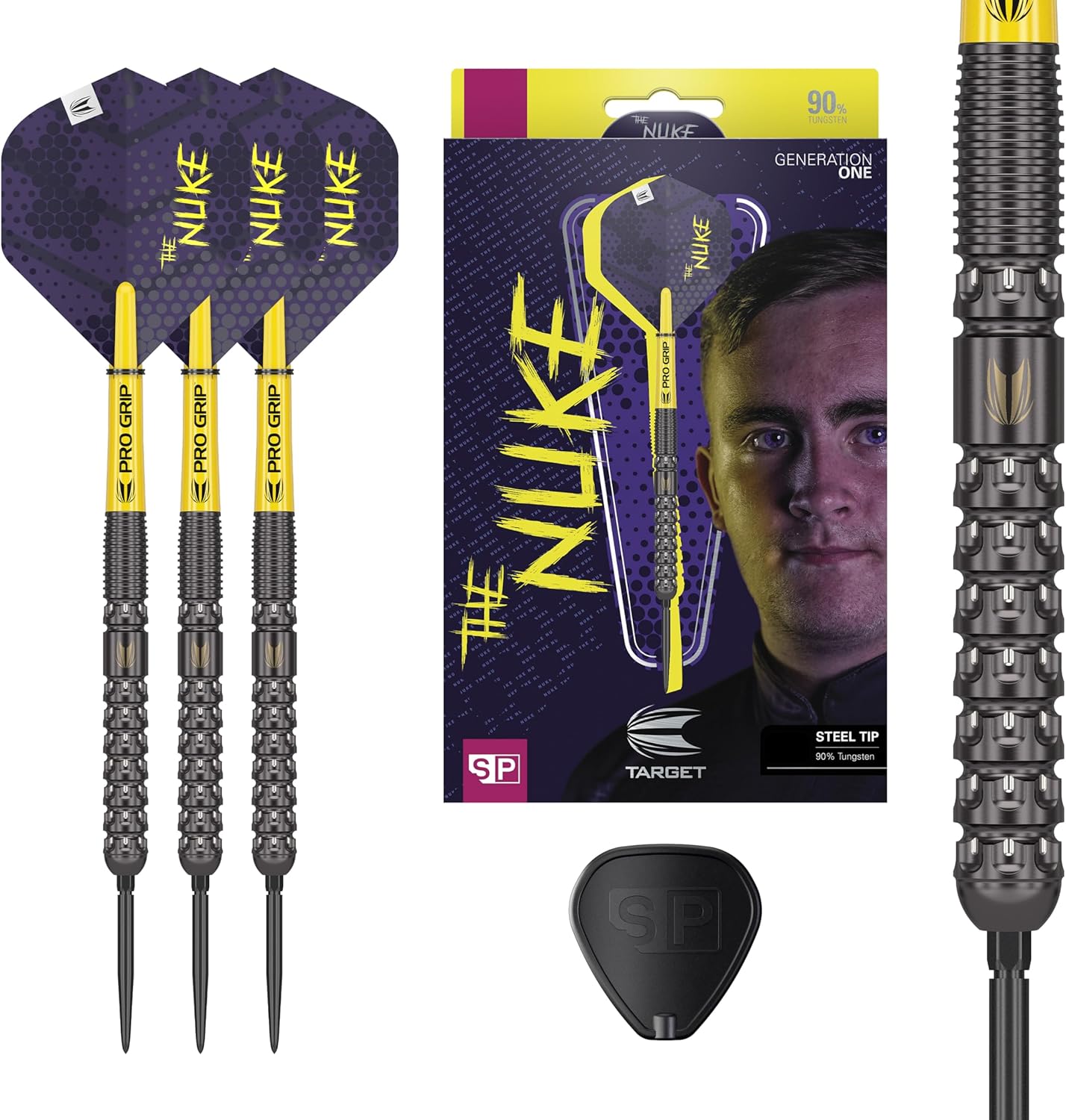
PDC / pro-style reference
£97.99
Target Darts Luke Littler Tungsten Swiss
A premium modern pro-style reference for players who want that feel, but not the default first choice for every beginner.
View pro-style set🧪 How to Test Your First Darts Without Confusion
Set a simple budget and keep one notebook while you run this routine across several sessions before judging results.
- Start with one baseline set One baseline set gives you clean comparison data.
- Keep flights and shafts simple Standard accessories reduce noise between sessions.
- Use the same drill across sessions Use one repeatable drill so performance trends are readable.
- Change one variable at a time Single-variable changes keep cause and effect obvious.
- Review after at least several sessions Multiple sessions beat one emotional practice night.
👤 What Real Player Setups Actually Mean for Beginners
Pro setups are useful references, but they are not one-size-fits-all prescriptions for a new player.
Pro branding does not guarantee personal fit.
Many beginners improve faster with mainstream setups.
Copying a full pro setup too early often creates noise.
Use pro setups as context and build your own baseline first.
⚖️ Trade-Offs to Understand
Pros
- Simple setups reduce decision fatigue.
- Stable baselines accelerate learning.
- Controlled testing prevents unnecessary spend.
Watch-outs
- Too many options early can stall progress.
- Spec shopping can replace actual practice.
- Over-customizing early limits pattern recognition.
⚠️ Common Beginner Mistakes
Mistake 1
Buying multiple advanced setups immediately.
Fix: Start with one baseline set before expanding.
Mistake 2
Ignoring throw routine while changing gear.
Fix: Stabilize your routine before judging equipment.
Mistake 3
Confusing pro branding with personal fit.
Fix: Use pro setups as references, not default choices.
Turn this setup into better matchplay
Use the right setup to reinforce doubles confidence, route decisions, and repeatable sessions.
❓ How to Choose Your First Darts FAQ
Should beginners copy a pro setup exactly?
Usually no. Pro setups are useful references, but your throw style and comfort should decide final choices.
Is tungsten required for first darts?
Tungsten is common because of its slimmer profile, but the key is a setup you can repeat confidently and consistently.
How many setups should I test first?
Keep it narrow. Start with one good baseline set, then only add one nearby comparison after several sessions.
What matters most: grip, weight, or balance?
All three matter, but beginners typically improve fastest by stabilizing weight and routine first, then refining grip and balance.
When should I upgrade my first darts?
Upgrade after enough sessions to identify clear patterns, not after one bad day.
Can expensive darts fix inconsistency?
Not by themselves. Practice quality and setup stability usually drive bigger gains than price tier.
🔎 Sources and Editorial Review
Written by
The Darts Fan editorial team
Reviewed against
WDF Playing Rules, PDC Rules of Darts, and standard matchplay conventions
Last reviewed
March 2026
How this page was built
This guide combines official references, practical home setup logic, and player-context examples to help beginners and improving players make better equipment decisions.
Editorial note
Player setups are examples for context, not one-size-fits-all recommendations.