
Dart Weights Explained
Dart weight affects timing, rhythm, and release feel, but there is no universally best number. This guide helps you test smartly and build repeatable throw comfort.
- Most players test 22g to 24g first Start in this range before testing extreme light or heavy options.
- Weight changes timing more than raw accuracy Release timing and rhythm usually change before raw scoring does.
- Balance and barrel shape still matter Weight decisions work best when barrel shape and balance stay in view.
🚀 Beginner Test Plan
New to dart weight? Start with a controlled 22g-24g test before fine-tuning flights, shafts, or advanced setup details.
- Test 22g, 23g, and 24g first Use one repeatable routine so your decisions come from session data.
- Keep barrel shape, shaft, and flights consistent while testing Use one repeatable routine so your decisions come from session data.
- Use the same practice routine for each weight Practical reference point to keep decisions clear and repeatable.
- Give each weight multiple sessions before deciding Practical reference point to keep decisions clear and repeatable.
- Choose repeatability and comfort, not hype Practical reference point to keep decisions clear and repeatable.
📊 Weight zones and what usually changes
Use these zones to predict what might change when you move up or down in weight.
Weight is only one variable, but most players feel timing differences quickly between ranges.
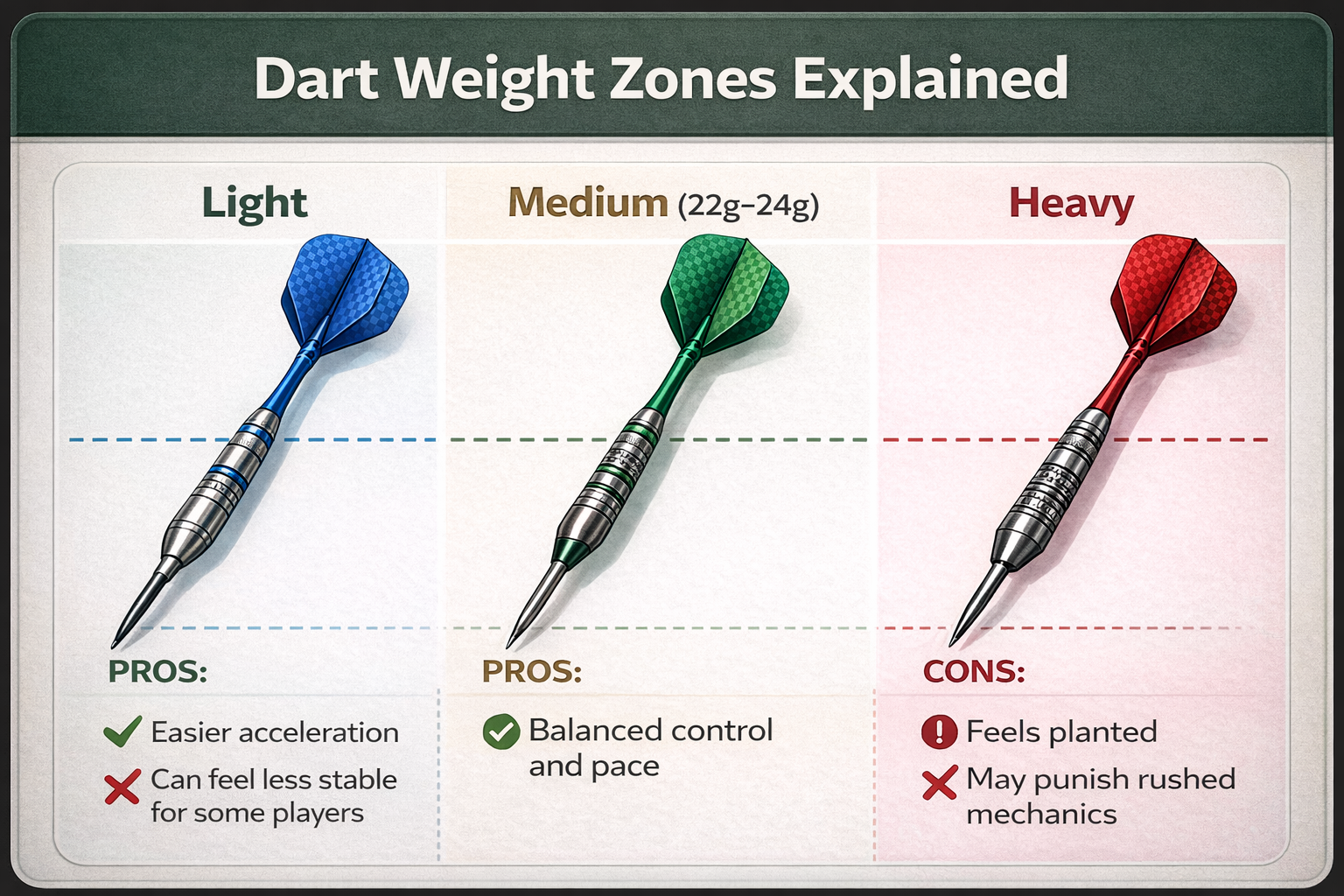
- Light: easier acceleration, can feel less stable for some players.
- Medium (22g–24g): common starting point with balanced control and pace.
- Heavy: can feel planted, but may punish rushed mechanics.
📘 Core explanation
What dart weight actually changes
Weight mainly changes throw tempo and release sensation. Heavier darts often reward a smoother rhythm, while lighter darts can reward a cleaner acceleration and wrist timing.
Why similar weights can still feel different
Two 22g darts can feel completely different because barrel shape, grip pattern, shaft length, and flight shape alter balance. Compare full setups, not weight in isolation.
What beginners should test first
Start with 22g, 23g, and 24g, keep setup parts stable, and compare results over several sessions. This keeps your decision clear and repeatable.
🎯 What Real Player Setups Show
PDC Weight Snapshot
This snapshot is generated from profiled players with documented dart weights and updates automatically when player profile data changes.
Dataset metrics
Dataset coverage
136 profiled players
All percentages below are based on players with documented dart weight.
Average weight
22.8g
Mean value across the documented player sample.
Most common band (22g–23g)
72 players (53%)
This remains the strongest baseline range in this PDC-oriented dataset.
Contrast note: Above 25g: 5 players (4%) · Above 30g: 1 player (1%)
Player setup anchors
Affiliate note: some links below may earn a commission at no extra cost to you.
Light setup reference

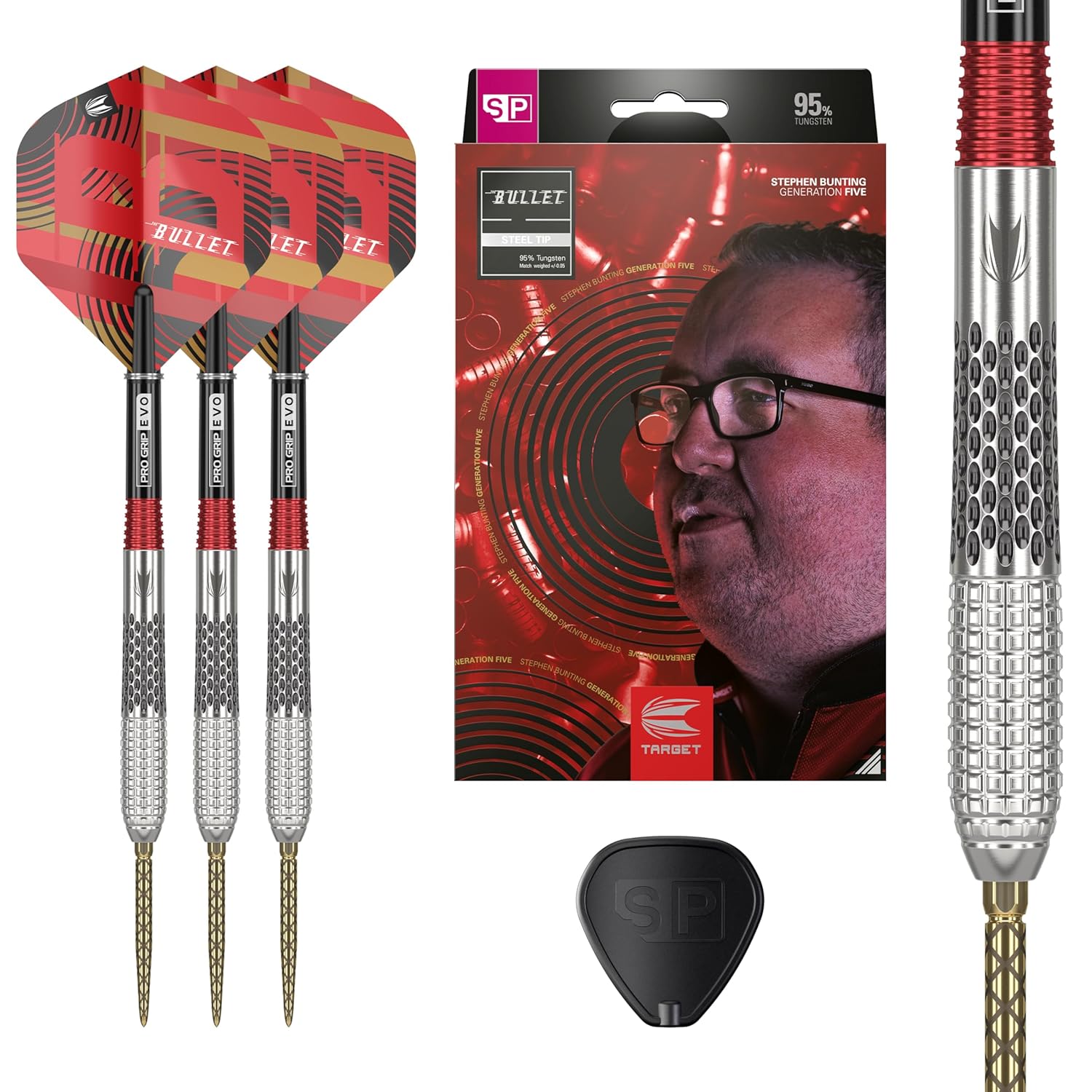
Stephen Bunting
Target · 18g · Steel tip
Useful for testing whether a lighter setup improves your throw tempo and release speed before locking into heavier ranges.
Also relevant: James Wade (20g) · Ricky Evans (20g) · Nick Kenny (20g)
Player set
Target Darts Stephen Bunting G5
£24.95
View Bunting setHeaviest documented setup

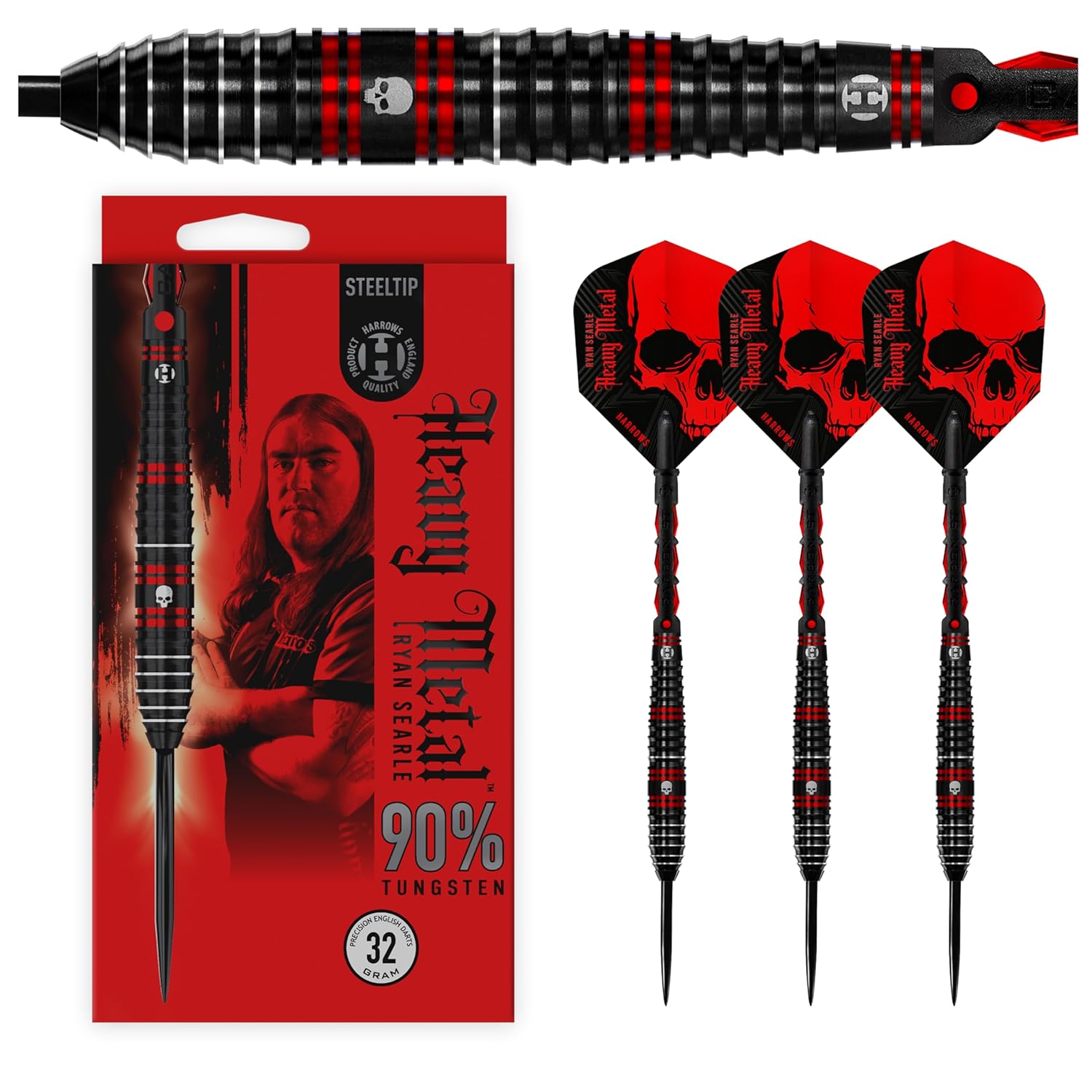
Ryan Searle
Harrows · 32g · Steel tip
A heavy reference is valuable for contrast testing, especially if you want to feel how planted weight changes timing and follow-through.
Also relevant: Nathan Aspinall (26g) · Adam Warner (26g) · Tommy Morris (26g)
Player set
Harrows Ryan Searle 90% Tungsten
£74.95
View Searle setPopular standard range reference

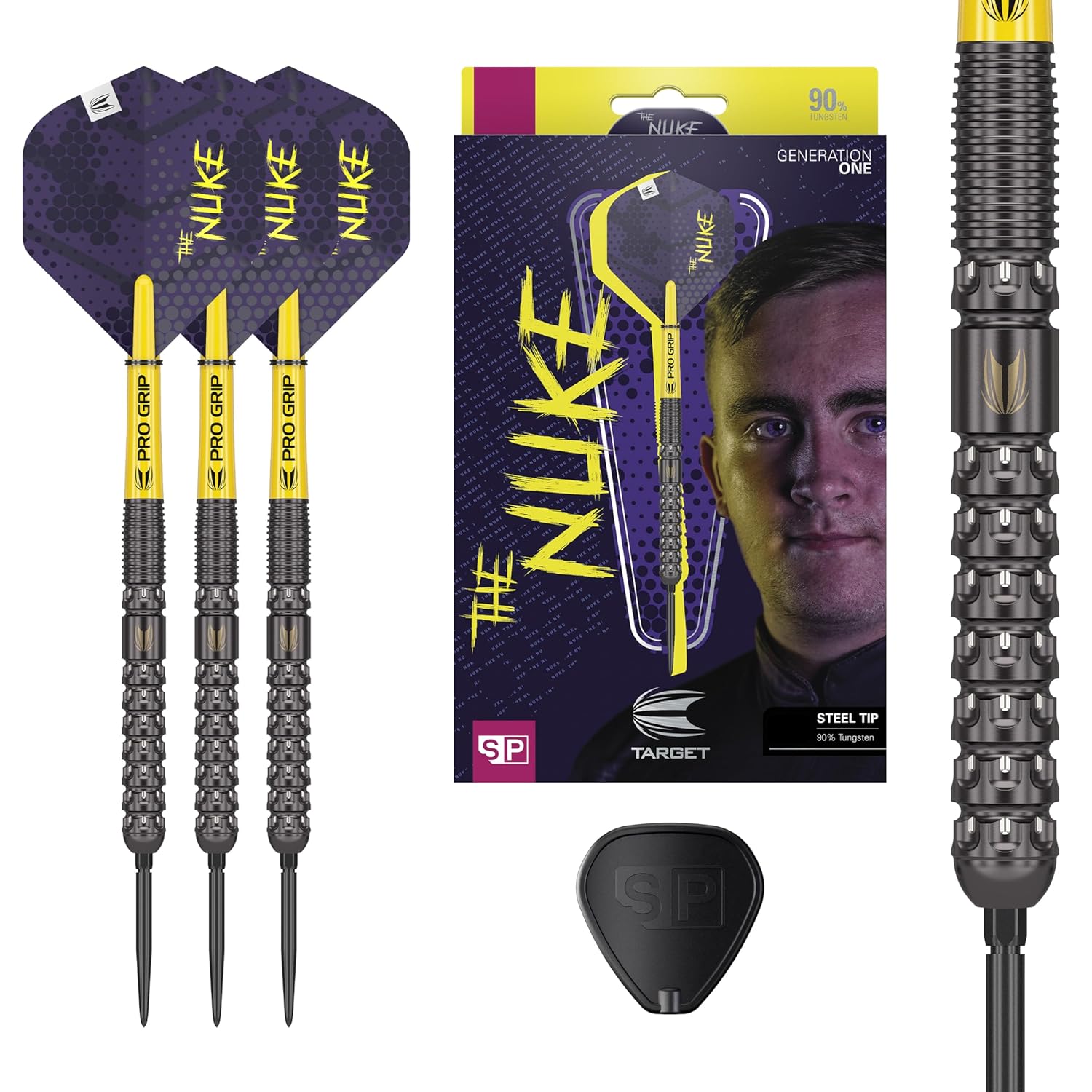
Luke Littler
Target · 23g · Steel tip
This is the most practical baseline range for most players before experimenting with extreme light or heavy setups.
Also relevant: Luke Humphries (22g) · Michael van Gerwen (22g) · Jonny Clayton (22g)
Player set
Target Darts Luke Littler G1
£97.99
View Littler setLegend setup reference
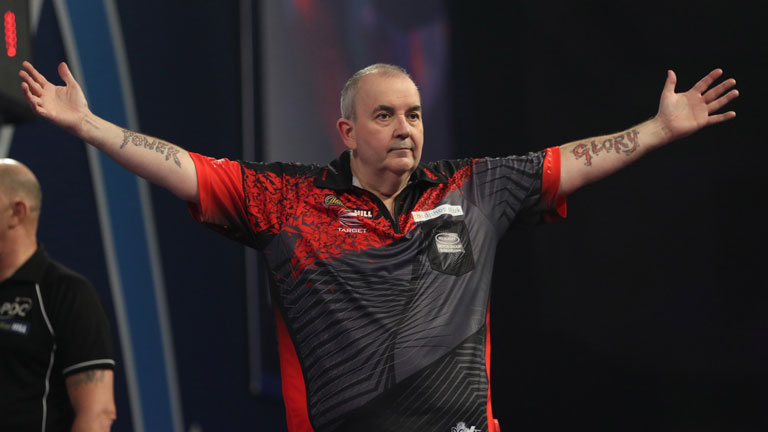
Phil Taylor
Target · 26g · Steel tip
A classic 26g legend setup is a useful fourth anchor if mainstream 22g-24g tests feel too quick and you want more planted timing.
Also relevant: Josh Rock (24g) · Nathan Aspinall (26g) · Krzysztof Ratajski (24g)

Player set
Target Phil Taylor Power 9Five G3
£104.99
View Taylor setUse these profiles as test anchors, not copy-paste prescriptions. Full setup feel still depends on barrel shape, shafts, flights, and release style.
⚖️ Trade-offs to understand
Pros
- A stable weight supports repeatable release timing.
- A tested range reduces random equipment changes.
- Comfort usually improves confidence under pressure.
Watch-outs
- Switching weight too often can stall progress.
- One heavy or light session is not enough to judge.
- Weight alone will not fix setup inconsistency.
⚠️ Common Mistakes
Mistake 1
Buying only one weight and treating it as final.
Fix: Test a narrow range before locking in one number.
Mistake 2
Changing weight and flight shape at the same time.
Fix: Change only one setup variable at a time.
Mistake 3
Judging weight only by one good or bad session.
Fix: Judge weight over several comparable sessions.
🛠️ Practical Advice
Use this as a final checkpoint before you lock in one weight.
- Test each weight for at least three sessions.
- Track hit groups and miss patterns in notes.
- Keep one preferred double for comparison drills.
- Review setup only after stable sample size.
Turn this setup into better matchplay
Use the right setup to reinforce doubles confidence, route decisions, and repeatable sessions.
Best doubles to leave
Build setup routes around your strongest finishing doubles.
Open doublesCheckouts81-100 improvement range
Practice score reading and route discipline under pressure.
Open 81-100Player setupLuke Littler setup profile
Reference a mainstream 23g steel-tip player setup.
View profile❓ Dart Weights Explained FAQ
What dart weight should most beginners start with?
Many beginners start around 22g to 24g because it offers a practical balance of control and speed. The best choice comes from testing, not from one universal number.
Do heavier darts always give better control?
Not always. Heavier darts can feel stable, but they also require timing that suits your throw. Some players gain better consistency with medium weights.
Is 1 gram difference noticeable?
For many players, yes. A 1g shift can change release timing and grouping behavior, especially during long sessions.
Should I copy a pro player weight exactly?
Use pro weights as reference points, not fixed instructions. Matching a full setup and throw style matters more than copying one number.
How long should I test one weight?
Give each weight multiple sessions under similar conditions. Short tests can be misleading because daily form varies.
Can barrel shape outweigh weight differences?
Yes. Barrel profile and grip distribution can change feel as much as weight, so test complete setups before deciding.
🔎 Sources and Editorial Review
Written by
The Darts Fan editorial team
Reviewed against
WDF Playing Rules, PDC Rules of Darts, and standard matchplay conventions
Last reviewed
March 2026
How this page was built
This guide combines official references, practical home setup logic, and player-context examples to help beginners and improving players make better equipment decisions.
Editorial note
Player setups are examples for context, not one-size-fits-all recommendations.